Canoe Tripping Without the Next-Day Soreness
There's nothing like waking up on a wilderness trip — except waking up so stiff you can barely load the canoe. Multi-day tripping is uniquely hard on the body: long hours seated or kneeling, heavy portage loads, and the same paddling pattern repeated thousands of times. The good news is that the soreness is largely preventable.
Where trip soreness really comes from
Hips and low back — hours of sitting and kneeling shorten the hip flexors and stiffen the spine. The low back is one of the most commonly injured regions across paddling sports, and most paddling injuries are overuse-related rather than traumatic (Wang et al., 2026) — exactly the slow-build kind a long trip produces.
Shoulders and neck — repetitive paddling plus the forward posture of watching the bow.
Knees and ankles — kneeling positions and uneven portage footing.
Everything, after a portage — loaded carries over rough ground tax the whole chain.
The three-part fix
Prep before you go. A few weeks of mobility and targeted exercise builds range and resilience. This matters for the low back especially: nonspecific low back pain — the kind sitting and loading aggravate — responds well to targeted motor-control exercise (Berberoğlu & Ülger, 2023). Don't arrive at the put-in cold.
Move on the water and at camp. Two minutes of standing hip openers, thoracic rotations, and shoulder rolls at each break resets the positions tripping forces on you. Our Seated Mobility Program is built for exactly this — no equipment.
Fuel and hydrate for the work. Under-fueling shows up as fatigue, poor sleep, and slow recovery — brutal on day three. See the Nutrition pillar.
This isn't theory — it's lived experience
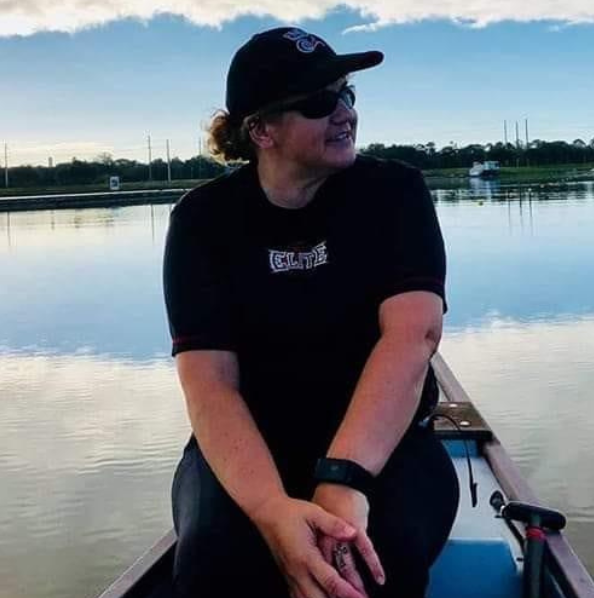
Coach Annely grew up in Atikokan, Ontario — the Canoe Capital of Canada — paddling the Quetico–Boundary Waters Wilderness. The mobility approach in our programs comes from decades on the water combined with elite coaching credentials, not a generic gym template. Want to move well for your whole trip? Start with the 28-Day Mobility Challenge before your next expedition.
Evidence-informed guidance, not a substitute for individual medical advice.
References
Berberoğlu, U., & Ülger, Ö. (2023). Multimedia instructions for motor control exercises in patients with chronic nonspecific low back pain. Journal of Sport Rehabilitation, 32(4), 424–432. https://doi.org/10.1123/jsr.2022-0158
Wang, J., Ma, H., Mu, Z., Imai, K., Yan, H., Wang, H., Han, Z., Shen, S., Zhou, X., & Yi, L. (2026). Epidemiology of musculoskeletal injuries in Chinese collegiate dragon boat athletes: A cross-sectional survey. Frontiers in Public Health, 14, Article 1830415. https://doi.org/10.3389/fpubh.2026.1830415